Exploring Old Town Albuquerque: History, Shops, and Local Charm

Exploring Old Town Albuquerque: History, Shops, and Local Charm

Exploring Old Town Albuquerque: History, Shops, and Local Charm

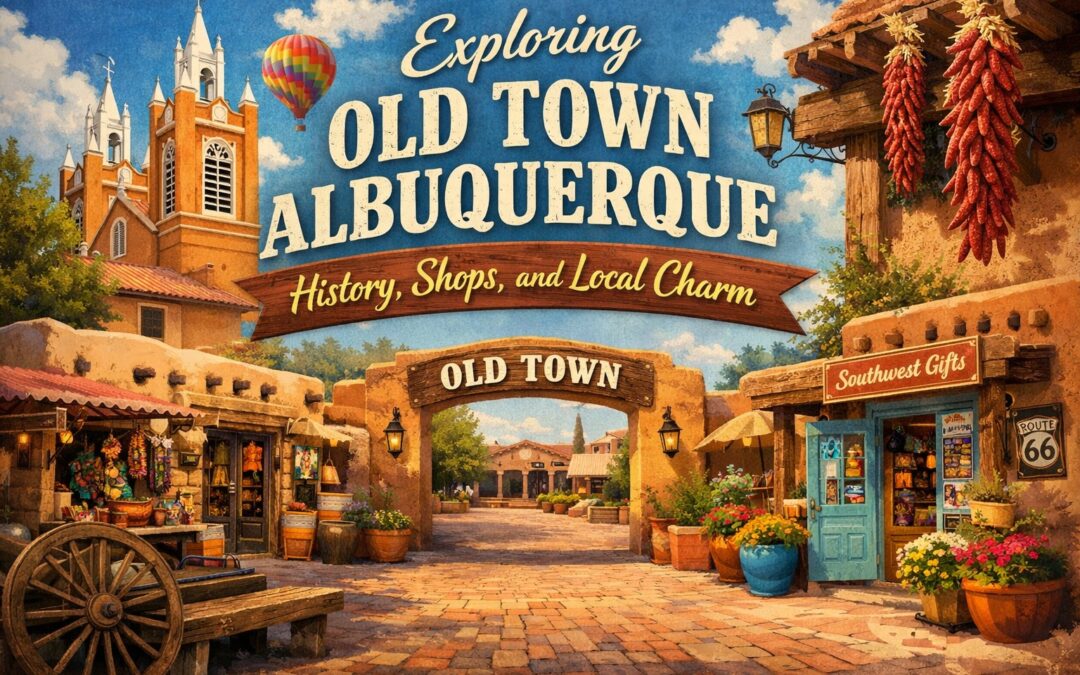
Old Town Albuquerque is one of the best places to begin if you want to understand the city. It was Albuquerque’s first neighborhood, and centuries after its founding, it remains a center for culture, architecture, shopping, art, and cuisine. That alone makes it worth visiting, but what really gives Old Town its appeal is how naturally it blends history with present-day life.

What makes Old Town stand out is its walkability. Instead of feeling like a district you only drive through, it invites you to slow down. The adobe-style buildings, shaded plaza, narrow streets, and central church give the area a sense of place that feels distinctly New Mexican. For first-time visitors, it is one of the easiest places in Albuquerque to experience the city’s roots while still enjoying shops, restaurants, and museums in one compact area.

The history here is not hidden in the background. It is the main attraction. Walking through Old Town feels different from walking through a newer commercial district because you can sense that the area has been central to Albuquerque life for generations. You are not simply visiting a cluster of stores. You are spending time in the place where the city began.

One of the most recognizable landmarks in the district is San Felipe de Neri Church, which anchors the plaza and helps define the visual identity of Old Town. Even if you are not planning a formal history tour, the church and the surrounding plaza immediately show how closely Albuquerque’s cultural and architectural identity are tied to its past.

Old Town is also one of Albuquerque’s best shopping districts. The area is full of galleries, boutiques, artisan shops, souvenir stores, and places that lean heavily into regional style. That makes it especially appealing for visitors who want their shopping to feel connected to the place they are visiting rather than generic.

The shopping experience feels more personal than what you get in a standard retail area. Southwestern pottery, Native American jewelry, woven goods, local artwork, and regionally themed gifts all appear throughout the neighborhood. Even the souvenir shopping tends to feel more thoughtful because so much of it reflects Albuquerque and the broader Southwest more directly.

Art is another major part of the Old Town experience. The district includes galleries and creative spaces that reinforce how closely Albuquerque’s visual culture is tied to history, local materials, and regional identity. Old Town is not just historic. It is still creatively active, and that keeps it from feeling like a preserved backdrop.

Beyond shopping and strolling, Old Town also gives visitors easy access to museums. That makes it especially appealing for first-time travelers who want more than photos and souvenirs. You can wander the plaza, eat lunch, browse galleries, and then step into a museum for deeper context about Albuquerque and the Southwest.

Old Town also stays lively because it is not locked into one season. Different times of year bring their own events, celebrations, and atmosphere, which helps the area continue functioning as a real community space rather than only a visitor destination. That gives it a warmth many historic districts struggle to maintain.

Another reason Old Town works so well for visitors is flexibility. You can make it a quick stop for coffee and shopping, or turn it into a fuller day with museums, lunch, galleries, and a walking tour. It adapts well to different travel styles, which is one reason it remains one of Albuquerque’s most reliable destinations.

In the end, Old Town Albuquerque is worth exploring because it gives visitors a little bit of everything that makes the city memorable. It has real history, distinctive architecture, local shops, regional art, nearby museums, and a slower pace that encourages you to look around instead of rush through. More than 300 years after its founding, it remains one of the clearest expressions of Albuquerque’s identity.


Why the Albuquerque International Balloon Fiesta Is a Must-See Event

Why the Albuquerque International Balloon Fiesta Is a Must-See Event

Why the Albuquerque International Balloon Fiesta Is a Must-See Event

The Albuquerque International Balloon Fiesta is not just Albuquerque’s most famous event. It is the city’s most iconic image and one of the most unforgettable experiences in the Southwest. Every year, hundreds of balloons fill the sky over Albuquerque, creating the kind of spectacle that feels almost unreal the first time you see it. For many travelers, it is the main reason they visit. For others, it becomes the highlight of a trip that already included the city’s food, culture, and scenery.

What makes the Balloon Fiesta special starts with scale. Seeing one or two hot air balloons is memorable. Seeing hundreds rise into the sky during a mass ascension is something entirely different. It turns the morning into an event rather than just a sightseeing opportunity. The field, the crowd, the burners, and the growing color overhead all work together to create an atmosphere that feels bigger than a normal festival.

But the event is not only impressive because it is large. It is also immersive in a way many famous festivals are not. Visitors are not just watching from a great distance. One of the most exciting parts of the experience is being close enough to see the balloons inflate, hear the burners fire, and feel the energy on the field before launch. That closeness makes the event feel personal as well as spectacular.

Another reason the Balloon Fiesta is a must-see is that it feels tied directly to Albuquerque itself. The city’s weather, geography, and open skies help make ballooning especially successful here. Because of that, the Fiesta does not feel like an event that could happen just anywhere. It feels connected to the landscape and the atmosphere of Albuquerque in a very real way.

The visual setting adds even more to the experience. Early October mornings in Albuquerque can be crisp, clear, and full of dramatic light. When balloons rise against the backdrop of the Sandia Mountains and the wide New Mexico sky, the whole event becomes incredibly photogenic. That is one reason the Fiesta is so often associated with unforgettable travel imagery.

The evening glows are another major part of what makes the event memorable. Morning ascensions tend to get the most attention, but the nighttime glow events offer a completely different experience. Instead of watching balloons drift across the sky, you see them lit from within, turning the launch field into a glowing sea of color. It feels festive, dramatic, and almost dreamlike.

The Fiesta also has a playful side that broadens its appeal. The special shape balloons are one of the reasons families and casual visitors love the event so much. Seeing giant balloons shaped like animals, cartoonish figures, or whimsical objects adds humor and personality. It keeps the event from feeling too formal or one-dimensional and gives it a sense of joy that is easy to connect with.

Another reason the Balloon Fiesta matters is that it gives travelers a strong reason to experience Albuquerque itself. The event naturally pulls people into the city’s hotels, restaurants, attractions, and neighborhoods. It is not usually a one-hour stop you check off and forget. Instead, it becomes the centerpiece of a broader Albuquerque trip.

There is even something compelling about the fact that ballooning depends on the weather. Because launch decisions are based on real conditions, each morning carries a bit of uncertainty. Rather than weakening the experience, that uncertainty adds to it. When the balloons go up, it feels like everything came together exactly as it should.

The Balloon Fiesta also captures something essential about Albuquerque’s identity. The city is known for big skies, dramatic scenery, and a pace that encourages people to look up and take in the landscape. The Fiesta turns those qualities into a world-class event. It reflects the city rather than distracting from it.

In the end, the Albuquerque International Balloon Fiesta is a must-see because it combines scale, beauty, local identity, and a one-of-a-kind setting. You get hundreds of balloons, sunrise over the mountains, evening glows, playful shapes, and a city whose natural environment helps make the whole thing possible. Plenty of festivals are popular. Very few feel this visually distinctive or this connected to the place where they happen.

The Best Day Trips You Can Take From Albuquerque

The Best Day Trips You Can Take From Albuquerque

The Best Day Trips You Can Take From Albuquerque

One of the best things about Albuquerque is its location. The city sits in the middle of New Mexico, which makes it a strong home base for quick adventures in almost every direction. For first-time visitors, the best day trips usually come down to what kind of experience you want. Some are built around history and culture, others around dramatic landscapes, small-town charm, or outdoor adventure.

Santa Fe is one of the most obvious and worthwhile day trips from Albuquerque. As New Mexico’s capital, it offers a different feel while still sharing the state’s rich cultural identity. The city is known for its historic core, adobe architecture, art scene, museums, and walkable Plaza area. It makes a great choice for travelers who want culture, shopping, architecture, and history all in one place.

What makes Santa Fe such a good day trip is the contrast. Albuquerque feels bigger and more spread out, while Santa Fe feels more compact and curated. You can spend the day browsing galleries, walking around the Plaza, visiting museums, and enjoying food in a setting that feels distinctly New Mexican but still noticeably different from Albuquerque.

Madrid is a great choice if you want a smaller, quirkier outing. It is the kind of place where a few relaxed hours of browsing local art, stepping into small shops, and enjoying the drive can feel like enough. It is not a giant destination, but that is part of the appeal. The experience is as much about the atmosphere as it is about checking off attractions.

Jemez Springs is one of the best options for a scenic and outdoorsy day. The appeal is not only the village itself, but the drive and the landscape around it. It offers a different side of New Mexico from what you see in Albuquerque’s metro setting and makes a good choice for travelers who want less city energy and more small-town quiet, mountain scenery, and time outside.

Bandelier National Monument is one of the most memorable historical and outdoor day trips you can take. It combines archaeology, hiking, and dramatic canyon scenery in a way that feels very specific to northern New Mexico. For travelers who enjoyed Albuquerque’s cultural side and want to go deeper, Bandelier makes a natural extension of that experience.

Acoma Sky City is another standout trip because it offers cultural depth and historical significance. It appeals especially to visitors who want to understand more of New Mexico beyond the standard tourist stops. Instead of focusing only on shopping or scenery, it adds perspective and a stronger connection to the region’s Indigenous history and living traditions.

El Malpais National Monument is a great option for travelers who want something more rugged and geologically dramatic. Lava flows, cliffs, wide-open views, and unusual terrain make it feel different from Albuquerque’s river corridor or foothills. If you want a day trip that feels more adventurous and less conventional, this is a strong pick.

One reason Albuquerque works so well as a travel base is that you do not have to choose between staying in the city and seeing more of New Mexico. You can enjoy Albuquerque’s food, culture, and attractions, then use an extra day or two to explore pueblos, mountain villages, art towns, or national monuments without changing hotels or overcomplicating the trip.

That flexibility is a major advantage for visitors. Albuquerque lets you settle in one place while still reaching very different experiences within a manageable drive. That makes the overall trip feel richer without making it feel rushed.

In the end, the best day trips from Albuquerque depend on what you want most from your time in New Mexico. Santa Fe is great for art and history. Madrid is perfect for quirky small-town charm. Jemez Springs offers scenic relaxation. Bandelier adds archaeology and hiking. Acoma brings cultural depth. El Malpais delivers dramatic landscapes. Together, they show just how much variety sits within easy reach of Albuquerque.

A Guide to Living in Albuquerque: Pros, Cons, and What To Expect

A Guide to Living in Albuquerque: Pros, Cons, and What To Expect

A Guide to Living in Albuquerque: Pros, Cons, and What To Expect

If you are thinking about living in Albuquerque, the city offers a mix that is hard to find in many places. It is large enough to have real city amenities, but it still feels more approachable and laid-back than many major metros. For many people, Albuquerque is appealing because of its sunshine, mountain views, cultural depth, and relatively manageable pace of life. At the same time, like any city, it comes with tradeoffs.

One of the biggest advantages is the weather. Albuquerque is known for sunshine, low humidity, and four distinct seasons without the harsh winters many other places deal with. In everyday life, that usually means more usable days outside. You can take a walk in winter, enjoy patio weather in spring and fall, and spend a lot of the year without dealing with constant dampness or long stretches of gray skies.

Outdoor access is another major strength. The Sandia Mountains, foothills, bosque, and open spaces make it easy to build movement into daily life. In some cities, outdoor recreation feels like a weekend-only plan. In Albuquerque, it can be part of an ordinary workweek. That is a big plus for people who value hiking, biking, scenery, and a lifestyle that feels less boxed in.

Housing is often more approachable than in many larger metros, especially for people coming from high-cost coastal markets. Albuquerque is not as inexpensive as it once was, but many newcomers still find it more realistic than cities with far higher housing costs. That said, affordability can feel different depending on your income, neighborhood, and expectations.

The city also has real cultural depth. Albuquerque does not feel generic. Native, Hispanic, Mexican, and broader Southwestern influences are visible in the food, neighborhoods, architecture, and public life. That gives the city character and helps it feel more grounded than places that seem interchangeable with dozens of other metros.

Neighborhood choice matters more than many newcomers expect. Albuquerque is not one uniform experience. Some areas feel more historic and walkable, others more suburban, others better for nightlife, views, or trail access. The city can feel very different depending on where you live, so choosing the right area is one of the biggest factors in whether Albuquerque feels like a good fit.

Public transit exists, but many residents still find it easier to rely on a car. Albuquerque is more spread out than a dense urban core, so driving often makes everyday life more convenient. The upside is that commuting tends to feel less intense than in larger metropolitan areas. The downside is that the city may feel less convenient if you prefer to live entirely without a vehicle.

An honest guide to Albuquerque also has to mention crime. Public safety is one of the biggest concerns people raise when talking about the city, and it is something that should be taken seriously rather than brushed aside. That does not mean every part of Albuquerque feels unsafe, but it does mean neighborhood research matters. Visiting areas at different times of day and looking beyond broad impressions can help you make a better decision.

Another thing to expect is dryness and elevation. Newcomers sometimes underestimate how different the high desert can feel. The sun is stronger, the air is drier, and it may take time to adjust if you are coming from a lower or more humid climate. Hydration, sunscreen, and a little patience go a long way.

Overall, living in Albuquerque usually means trading some big-city polish for more breathing room, better weather, easier outdoor access, and a stronger sense of place. It can be a great fit for people who value culture, scenery, and a more relaxed pace. It may be less ideal for people who want dense urban living, extensive transit, or a city with fewer public-safety concerns.

In the end, Albuquerque’s biggest appeal is that it feels distinctive. It has real personality, dramatic landscape, and a lifestyle many people find easier to enjoy day to day. But it works best when you go in with clear expectations, choose your neighborhood carefully, and understand both the strengths and the tradeoffs.

Top Family-Friendly Attractions in Albuquerque, New Mexico

Top Family-Friendly Attractions in Albuquerque, New Mexico

Top Family-Friendly Attractions in Albuquerque, New Mexico

Albuquerque is a strong family destination because it mixes hands-on museums, animal encounters, outdoor space, and easy sightseeing in a way that works for a wide range of ages. Some kids want animals, some want room to run, and some do best when they can touch, build, and experiment. Albuquerque gives families all three, often within a short drive of each other.

The ABQ BioPark is one of the easiest top picks because it is not just one attraction. It includes the Zoo, Aquarium, Botanic Garden, and Tingley Beach, which means parents can build a trip around different energy levels and interests. You can choose one stop for a shorter outing or turn it into a full day if the family has the stamina.

The Zoo is a reliable favorite because it works for almost every age group. Younger children can enjoy the excitement of seeing animals up close, while older kids still have enough variety to stay engaged. It is one of those attractions that tends to feel like a safe bet when you are visiting a city for the first time with children.

The Aquarium and Botanic Garden add another layer to the BioPark experience. The Aquarium gives families a cooler, more contained setting with fish and underwater exhibits, while the Botanic Garden offers outdoor walking paths, themed areas, and playful spaces. Together, they make a nice balance between calm indoor time and outdoor movement.

Explora Science Center is one of Albuquerque’s best options for families who want truly hands-on fun. It gives kids the chance to test, build, experiment, and learn through play rather than just observing from a distance. For many families, it becomes one of the most engaging stops of the trip because it lets children do more than just look.

The Balloon Museum is another strong family attraction because it connects to one of Albuquerque’s most iconic identities. It blends history, science, imagination, and movement in a way that feels educational without being dry. Even children who are too young to understand the details of ballooning can still enjoy the color, scale, and sense of wonder the museum creates.

Tingley Beach is a great option when a family wants some fresh air without committing to a long hike or a major ticketed attraction. It gives kids room to move around and gives parents a break from more structured sightseeing. That flexibility is valuable on family trips, especially when younger children need a slower pace.

The New Mexico Museum of Natural History and Science is another appealing option for kids who love dinosaurs, fossils, planets, or hands-on learning. Natural history museums often give families a mix of fun and education, and this kind of stop can work especially well when you want a break from pure outdoor activity.

Old Town can also be more family-friendly than people expect. Because it is walkable and close to several museums and attractions, it makes it easier for parents to build a flexible day. You might start at a museum, stop for lunch, browse a few shops, and adjust the rest of the afternoon based on everyone’s energy level.

One reason Albuquerque works well for families is that it does not force you into one kind of vacation. You can make a trip educational, playful, outdoorsy, or low-key depending on your kids’ ages and interests. The city gives families enough variety that parents can adapt instead of feeling locked into one style of itinerary.

In the end, Albuquerque’s best family-friendly attractions work because they cover different kinds of fun. The BioPark gives you animals, gardens, and aquariums. Explora gives you hands-on science. The Balloon Museum adds imagination and local identity. Tingley Beach gives you room to relax. That variety is exactly what makes Albuquerque such a good city for family travel.